Not sure if your kitchen countertop is real granite or a lookalike? After fabricating natural stone in El Paso since 1985, we've boiled it down to a few visual cues and simple at-home tests any homeowner can run in minutes.
The Visual Indicators of Authentic Granite That No Other Material Can Replicate
We have been working with natural stone since 1985 and one thing is consistent. Real granite has a story, and if you can read that story, you will know that the stone is genuine. Granite patterns are never consistent and they never repeat. This is the first thing we tell customers who visit our showroom and want us to analyze a sample they received from another provider.
Granite forms deep in the earth for millennia. Elements such as quartz, feldspar, and mica are exposed to extreme heat and pressure, which creates a non-repeating, multilayered appearance. If the stone on your countertop has a pattern that repeats itself within a few inches, it might not be genuine granite at all.
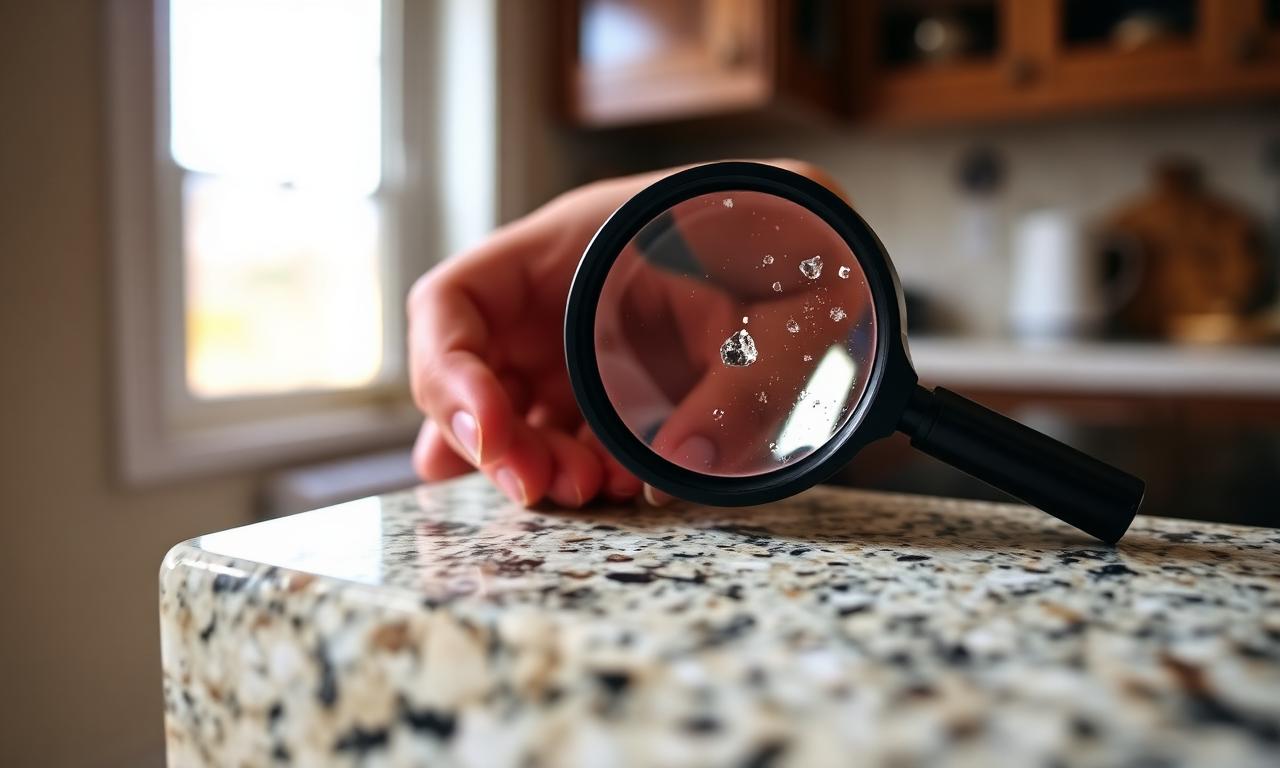
What to Expect to See in Granite in Detail: When you take a look at your countertops through a magnifying glass you should see small specks and spots that are reflective and resemble crystals or shards of mineral deposits; a gradual blending from one color to another with no abrupt edges or printed lines; small surface imperfections such as pits and fissures that may feel rough when you run your hand across; and a sense of depth, as if there were layers of color beneath the visible surface.
Manufactured products lack this depth and appear flat when viewed side by side. We import our granites directly from Brazil where each stone has its own distinctive character, and the granite cut into one slab is always different from the next.
Two Similar Pieces of Granite Will Not Look Alike: Select any two spots on the surface of your countertop, at least a foot apart, and scrutinize them with a magnifying glass. Real granite will show differences. The mineral concentration, the speckling, and even the veins will differ. While engineered products try to fake this randomness, they can't perfectly reproduce it.
This issue is common in El Paso homes built in the early 2000s. Many homeowners believed their countertops were granite because that's what the builder told them. Only a closer inspection reveals the printed pattern with identical, repetitive dots typical of laminates or cultured products.
Color Is Another Clue: The color of the stone depends on the source of the light. View your granite countertops during the day, at night, and under overhead lighting. Real stone will change appearance, looking different in sun versus artificial light. A quartz countertop or other synthetic product looks the same regardless of lighting.
Another surprise: many "black granite" countertops are not granite at all. Black gabbro or diabase is natural stone — just as hard-wearing and durable — but it's made of different minerals. If your dark countertop has no visible crystals or flecks of other material on the surface, it might be one of these stones instead.
The Borderland's strong desert sunlight actually makes it easier to see these differences. Natural light streaming through kitchen windows in the Eastside or Mission Hills will show details artificial light hides. We always recommend looking at your countertop near a window during daylight hours.
One West El Paso homeowner contacted us last year believing her granite was fake. She had read something online and panicked. We went out, looked at it, and she had natural fissure lines running through the slab. Real granite. She didn't know what to look for. Five-minute visit, and she was able to leave her perfectly good granite countertop alone.
If you're still not sure what's on your kitchen counter, come in with a photo and we can usually tell you in a few minutes. Our identification service is always free. Call 915 350 8100 and we'll set up a time.
These Easy at-Home Tests Can Tell You If Your Countertop Is Natural Stone
You don't need a degree in geology. A few simple kitchen tests will help a lot. We've walked hundreds of El Paso homeowners through these steps, and many are surprised at how easy they are to perform.
Real granite behaves differently from engineered materials — temperature, absorption rate, even feel. Before you call us, try these tests first.
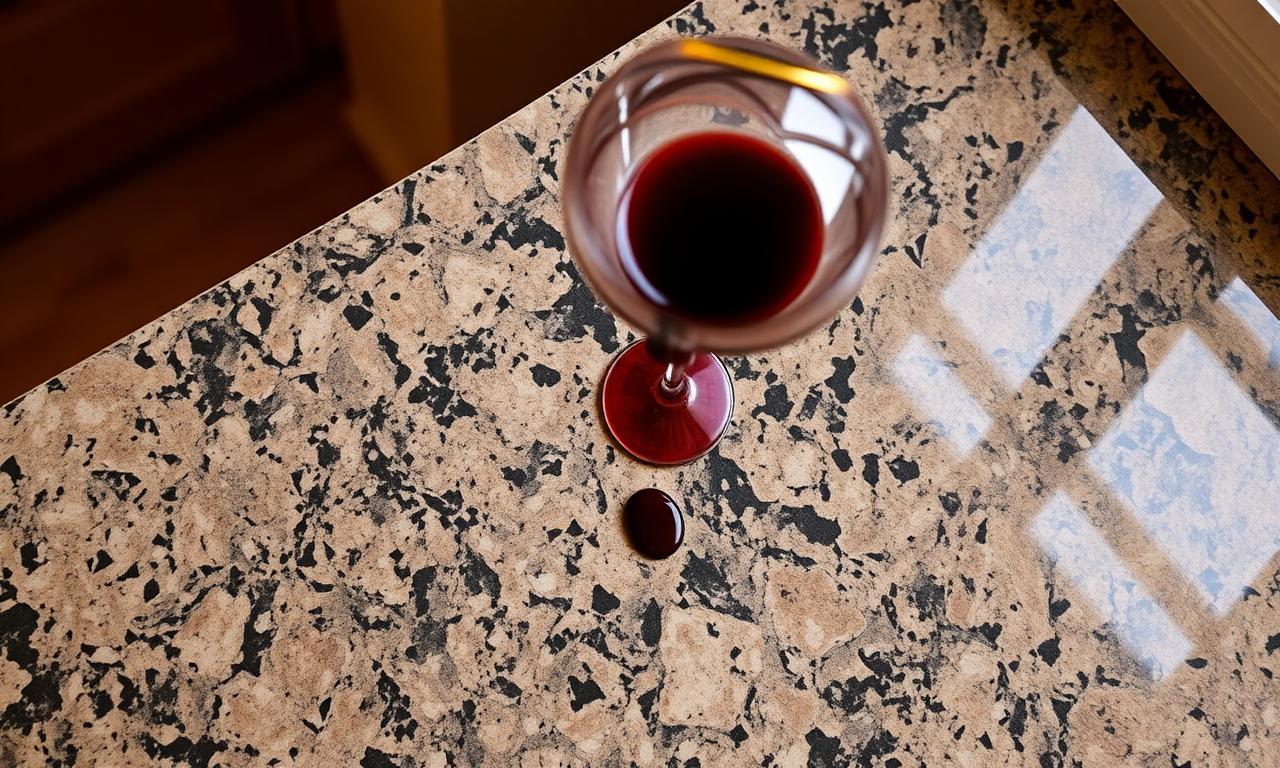
The Water Drop Test: Pick a small spot near a corner or edge. Place several drops of water and watch. Real granite should slowly absorb the water over a few minutes, and the area should darken slightly. Quartz and other manufactured countertops won't absorb water — the drops sit on top.
Here's what confuses many homeowners: a well-sealed granite countertop can behave like quartz in this test. If water sits for 15 minutes with no darkening, your surface can still be real granite. It might just be very well sealed. Always run the water test in an inconspicuous spot, like next to the backsplash or behind the overhang.
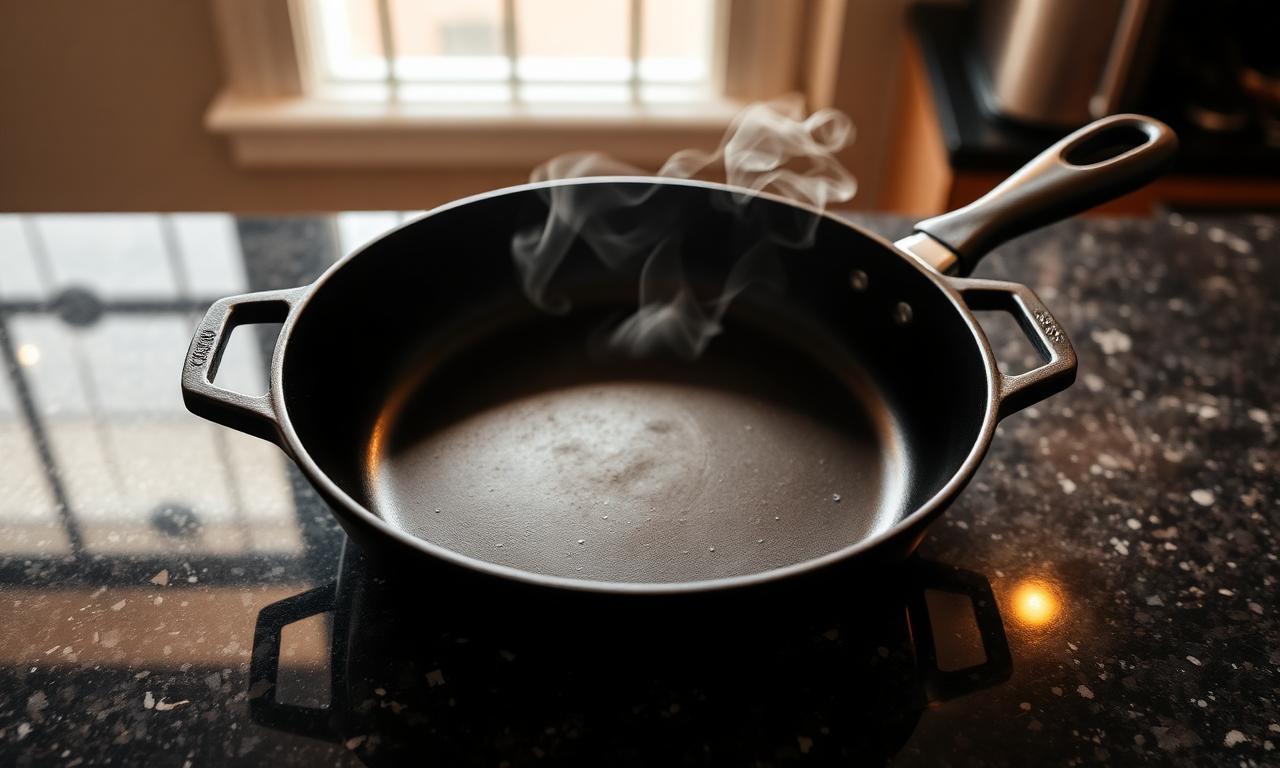
The Temperature Test: Real granite countertops always feel cool to the touch. Even in July's scorching El Paso heat, your granite will feel distinctly cooler than the room. Engineered and laminate countertops match room temperature much more quickly. Lay the back of your hand flat on the counter for five seconds. Natural stone pulls heat from your skin. Laminate or solid surfaces feel room-temperature or even warmer.
The Scratch and Tap Test: Granite is one of the hardest natural stones in the kitchen. Use a steel knife and try to scratch a hidden area lightly. Real granite resists scratching. If a scuff appears immediately, the stone is likely marble or something softer. Listen, too. Drop a coin or rap your knuckle on the stone. Granite gives off a high, ringing tone. Anything else sounds muffled or hollow. We've used this test on Borderland job sites for 35 years — it's one of the fastest.
The Pattern Test: All you need is a good set of eyes. Examine the pattern across the slab. Genuine granite is naturally random — no two spots should be identical. Granite is quarried around the world, and ours comes from Brazil. Every slab we receive is unique, and a machine can't simulate that. With engineered quartz, you'll notice repeating patterns. The flecks and swirls happen in a manufactured rhythm. Step back, look at the slab from a distance, and scan it. If a cluster of specks shows up every 12 to 18 inches, that's a strong sign you're looking at something man-made.
What if your tests give mixed results? It happens often. Countertops in older neighborhoods like Kern Place or the Upper Valley were sometimes sold as granite but turned out to be granite-look laminates. Other slabs are real granite but so heavily sealed they perform like engineered stone in most tests.
We're a family-owned El Paso stone fabricator since 1985 and we can identify a countertop in minutes. If you're still confused after running these tests, bring a photo to our Gateway Blvd E location or call 915 350 8100 to set up a visit. We're happy to help you identify what you have, whether you're looking at a replacement or a repair. These tests are a solid foundation. They're not a 100% replacement for a professional eye, but they'll cut out most of the guesswork.
Seams, Edges, and the Sink Cutout Reveal What the Surface Hides
The countertop surface gets most of the attention. But the real information is hiding underneath, along the sides, and around the sink cutout. We've been fabricating granite countertops for El Paso homeowners at our Gateway Blvd E shop since 1985 — the spots people overlook the most are exactly where the truth shows up.
First, the seams. Granite is thick and heavy. Most kitchens require at least one seam where two pieces of granite meet. At that seam you should see a continuous natural pattern, but not a perfectly matched mirror image. The mineral flecks, color shifts, and markings should look like they belong to one cohesive family of stone. If the pattern mirrors itself or shows a printed repeat, that's a red flag. Man-made surfaces and printed laminates often give themselves away at the seams.
What the Edge Profile Tells You: Touch the finished edge of the countertop. Granite feels cool and dense and is slow to warm up under your hand. The edge profile of genuine granite shows subtle irregularities in mineral composition. Tiny feldspar or mica crystals catch the light from different angles. Engineered quartz edges are more uniform — sometimes a little too even. Laminate edges often show a visible seam line between the decorative top and the strip.
We see this a lot in homes built during the mid-2000s building boom. In developments around the Eastside or out toward Horizon City, some builders used what they called "granite" when it was actually granite-look composite. Checking the edge is a fast way to know. If the cross-section is uniform in color with no natural striations, chances are it isn't natural stone.
The Sink Cutout Is Your Best Friend: This is one piece of advice we give every homeowner asking how to identify a countertop. Open the cabinet door under the sink. The area around the sink cutout was never polished, so it gives an honest look at the countertop material. Real granite shows a rough, crystalline surface with a visible mineral grain. The color may not even match the polished edge on top — that's natural stone doing what it does.
If the rough area is smooth, solid, or layered like plywood, the countertop is not real stone. Some quartz countertops show a uniform speckled pattern on the back of the cutout, but they won't have the random mineral deposits you see in granite quarried from Brazil. That's why we take pride in sourcing our materials directly — we know exactly what uncut Brazilian stone looks like, and what the finished result should be.
Not sure what you have? Use a flashlight. Get under the sink and look right at the cut edge of the sink hole. That alone will usually answer the question.
Another good place to check is the seam between the countertop and the backsplash behind the sink. With granite, the backsplash piece will match the countertop because it was cut from the same slab — the grain continues through the seam. With a printed countertop or composite, the backsplash pattern will visibly break at the seam. The dry desert climate here in El Paso means water damage is rarely an issue, but you do want to know what your countertop is so you can care for it correctly.
If you'd like an expert eye, we're happy to help. As a family-owned granite and quartz fabricator in El Paso since 1985, we've seen every countertop material that's ever come through Borderland homes. Visit our showroom on Gateway Blvd E or call 915 350 8100. Our team knows the difference between granite, quartz, and the lookalikes in our market — and we'll help you figure out what you have.