Most El Paso homeowners keep a tub of Clorox disinfecting wipes within arm's reach of the kitchen. They smell clean, they kill germs fast, and they feel like the right tool for almost anything. But should you actually be using them on your quartz countertops? It's one of the most common questions we hear at our Gateway Blvd E showroom, and the honest answer is no — at least not as a daily habit.
Understanding the Ingredients in Clorox Wipes and How They Interact with Quartz
Most disinfecting wipes like Clorox use ingredients like alkyl dimethyl benzyl ammonium chloride — also known as a quaternary ammonium compound, or a quat. According to the EPA, quats are effective on non-porous surfaces like stainless steel or glass. Unfortunately, they don't work so well with the polymer resins found in engineered surfaces like quartz. The resin in quartz binds the quartz crystals together and creates the solid, waterproof finish you love about these countertops.
Disinfecting chemicals can break down resin over time, even after just a single use. Use them regularly and the surface starts to look dull or cloudy, making your countertop look aged and tired. Homeowners often blame their stone for losing its polish, but quartz is remarkably durable and rarely loses shine on its own. It's almost always surface damage to the resin layer.
The pH factor matters too. Many active ingredients in disinfectant wipes sit in the high 10–11 pH range, firmly alkaline. Most quartz manufacturers recommend cleaners in the 5–8 pH range for daily care. So you're not just cleaning — you're applying a caustic substance, and using it frequently only compounds the damage.
One El Paso homeowner recently mentioned her new quartz had begun to dull just one month after install. After looking at her kitchen we recognized the signs of resin damage right away. She'd been wiping the counters with Clorox daily. A pH-balanced cleaner and a damp microfiber cloth would have prevented the entire problem.
Bleach-based wipes are even worse. The sodium hypochlorite is more abrasive to the resin and can discolor certain quartz colors, leaving white residue that can't be buffed out. In El Paso kitchens with strong sunlight near windows, the combination of UV rays and harsh chemicals accelerates the reaction even faster. The wipe material itself can also leave micro-scratches when dragged across dust or food debris.
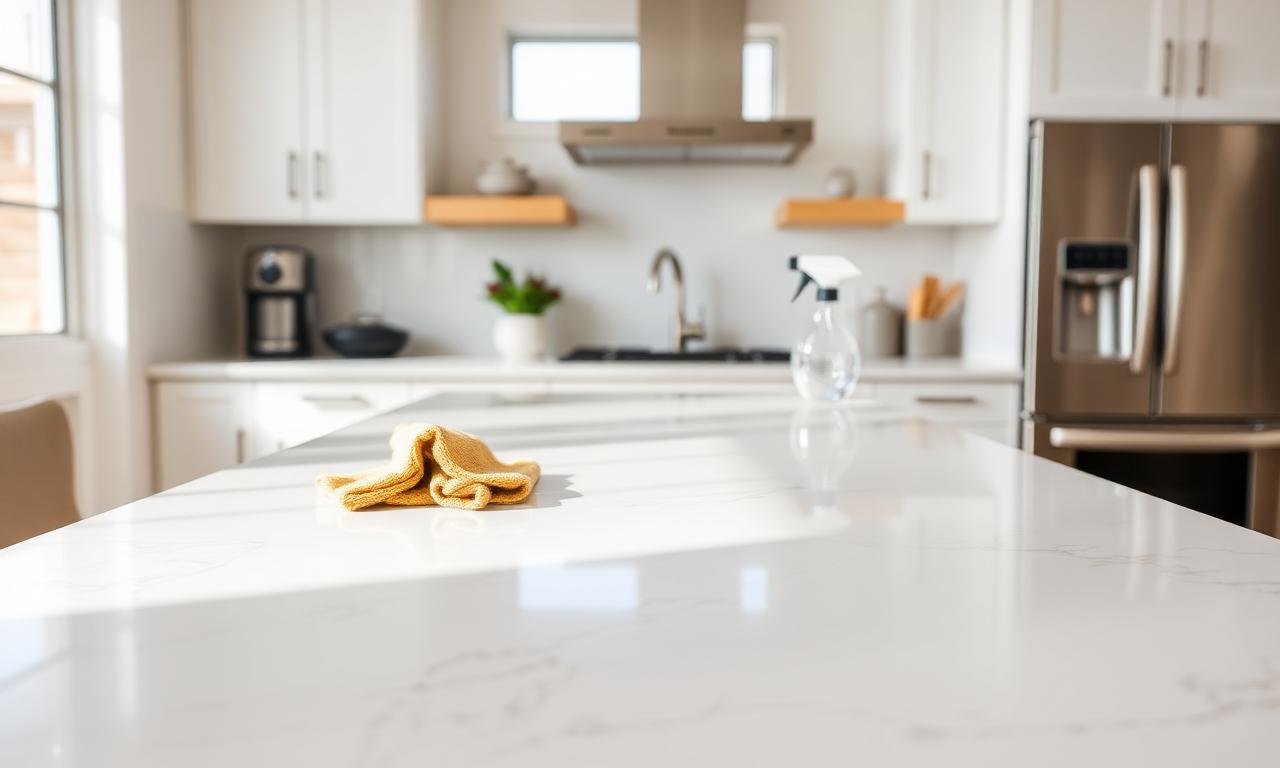
What should you use instead? A soft cloth moistened with warm water and a small amount of dish soap handles daily messes. To disinfect, mix rubbing alcohol and water in a spray bottle, mist the surface, let it sit for a minute, then wipe dry with a microfiber cloth. We've been fabricating quartz countertops in El Paso since 1985 and source our slabs directly from Brazil. Treat the surface gently and it will stay beautiful for decades.
Can I Use Clorox Wipes on My Quartz Countertops?
The direct answer is no — they shouldn't be part of your regular maintenance routine. At our family-owned shop on Gateway Blvd E we talk to a customer almost every month about cloudy areas and discoloration caused by cleaning products they thought were safe.
According to the Marble Institute of America, quartz countertops aren't pure quartz — they're roughly 90–93% ground quartz held together by polymer resin. That resin is what creates the polished, sealed surface and makes the stone so durable. The harsher the chemical, the faster the resin binder degrades. One Clorox wipe likely won't cause visible damage. The problem is repetition. Used night after night, those cloudy patches start to form near the sink and cooking range. We've seen homeowners from the Eastside and Mission Valley send us photos of two-year-old quartz that looks ten years old.
Here's what happens as the surface degrades: the chemicals slowly break down the resin, the disinfectant leaves an opaque film that won't come off, the weakened resin lets stains penetrate more easily, and color shifts in high-traffic zones around the cooktop and prep area. Resin damage is not repairable — once it's gone, it's gone.
Quartz simply doesn't need harsh chemicals. Wet a soft rag with warm soapy water, wipe down after each meal, and you're done. For tougher messes, use a non-abrasive cleaner specifically labeled safe for quartz. If you've already been using Clorox wipes, stop today, switch to dish soap and water, and inspect the surface under good lighting. If you see cloudy spots or dull areas near the sink, call us at 915 350 8100 and we'll take a look.
El Paso's Hard Water Makes Quartz Damage More Likely
Most homeowners don't realize this until it's too late: El Paso has some of the hardest water in the United States. The U.S. Geological Survey classifies our local supply as 'very hard,' with mineral concentrations well above the national average. That changes how you should care for quartz.
Here's the cycle. You wipe your counters with a Clorox wipe. The surface looks clean, but a thin film of moisture remains. In El Paso's dry desert air it evaporates within minutes, leaving calcium and magnesium behind. Those minerals bond with the chemical residue from the wipe and slowly build into a cloudy haze that no amount of regular cleaning will remove.
We see this pattern constantly. A homeowner near Cielo Vista or in the Eastside calls us because their quartz looks dull. They're cleaning more, not less, trying to fix it — and the Clorox wipe residue mixed with hard water minerals is exactly why. Plain dish soap rinses off; bleach residue stays. Low humidity speeds the whole process up. Homes near the Franklin Mountains and in the Upper Valley see this most.
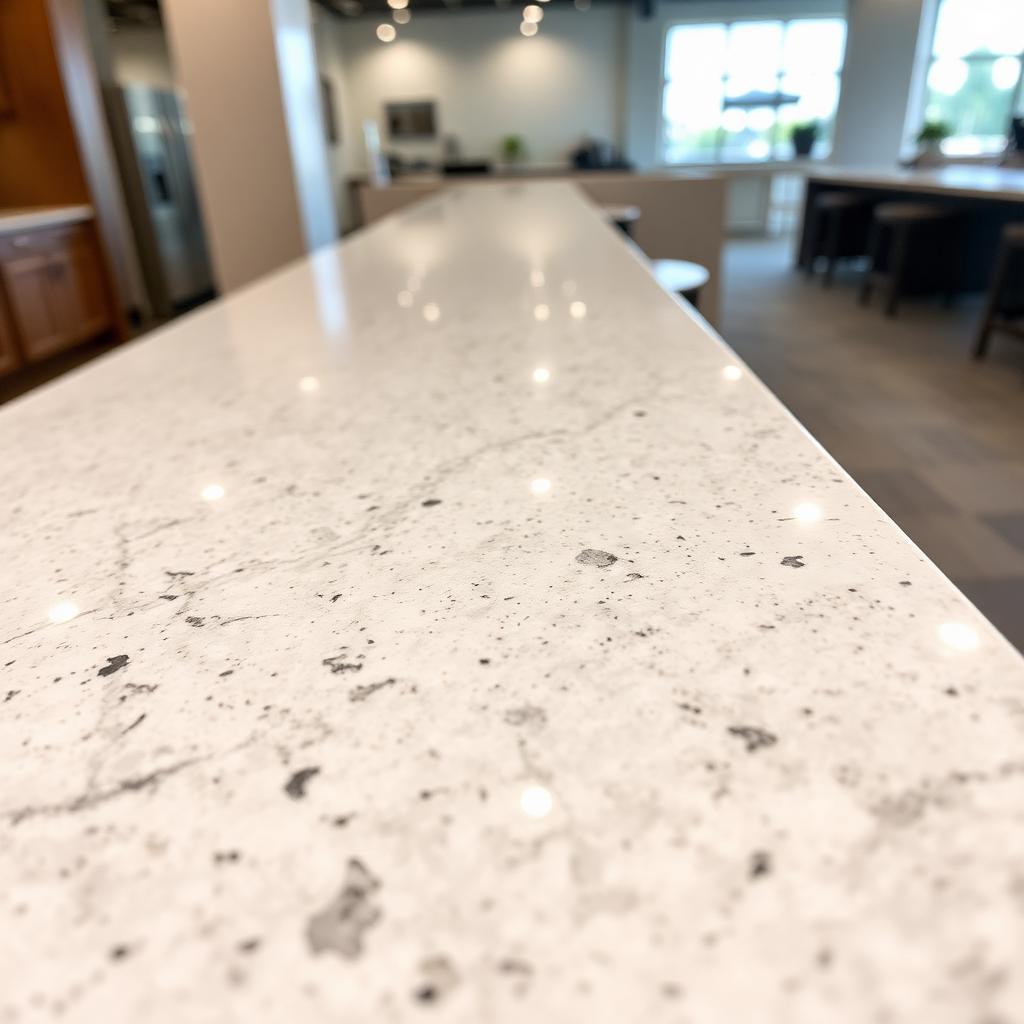
Signs of hard water damage on quartz include a white or cloudy film you can't wipe off, rough spots near the sink, water spots that keep returning in the same place, and an overall loss of shine. Catch it early and you can usually reverse it. Wait too long and the surface needs more serious attention.
Our recommendation: skip the Clorox wipes for daily cleaning. Use a soft cloth with warm water and a drop of mild dish soap, then dry the surface immediately — that last step is critical here. For occasional hard water spots, a 50/50 vinegar and water solution works, but don't use it daily because vinegar is acidic and will dull the finish over time. A quartz-safe cleaner once a week is plenty. We keep samples in our showroom on Gateway Blvd E showing well-maintained quartz next to hard water-damaged quartz so you can see the difference yourself. For new countertops or care advice on what you already have, give us a call at 915 350 8100.